EXPLORE OUR EXPERTISE
ENGINEERING THAT KEEPS YOU IN THE AIR
We deliver high-performance aviation solutions built for precision, safety, and long-term reliability. Our teams combine deep technical expertise with real-world operational experience to create systems that perform under pressure.
From aerodynamic optimization to complex aircraft systems, we focus on efficiency, scalability, and measurable results. Every solution is designed to meet the highest industry standards while staying adaptable to evolving aviation demands.
We don’t build concepts. We build solutions that fly.
RV Air Space Team

“
Check also: aircraft engine stands leasing

How to Calculate VDP – A Comprehensive Guide
Pilots navigating non-precision approaches face a crucial decision point that determines whether they achieve a stable landing or risk a dangerous descent. The Visual Descent Point (VDP) calculation provides a precise location where pilots can safely transition from instrument flight to visual landing while maintaining a standard 3-degree glide path. Understanding how to calculate this point—whether using the simple HAT ÷ 300 rule or more complex formulas—enables aviators to execute consistent, safe approaches even when published charts lack this vital reference.

Understanding RVSM Altitudes – A Comprehensive Guide
Flying between 29,000 and 41,000 feet requires precise altitude management under Reduced Vertical Separation Minimum protocols. Aircraft operating in RVSM airspace maintain just 1,000 feet of vertical separation instead of the traditional 2,000 feet, doubling available flight levels in this heavily utilized altitude range. This enables more efficient routing, reduced fuel consumption, and increased airspace capacity—benefits that come with strict equipment requirements and specialized pilot training.
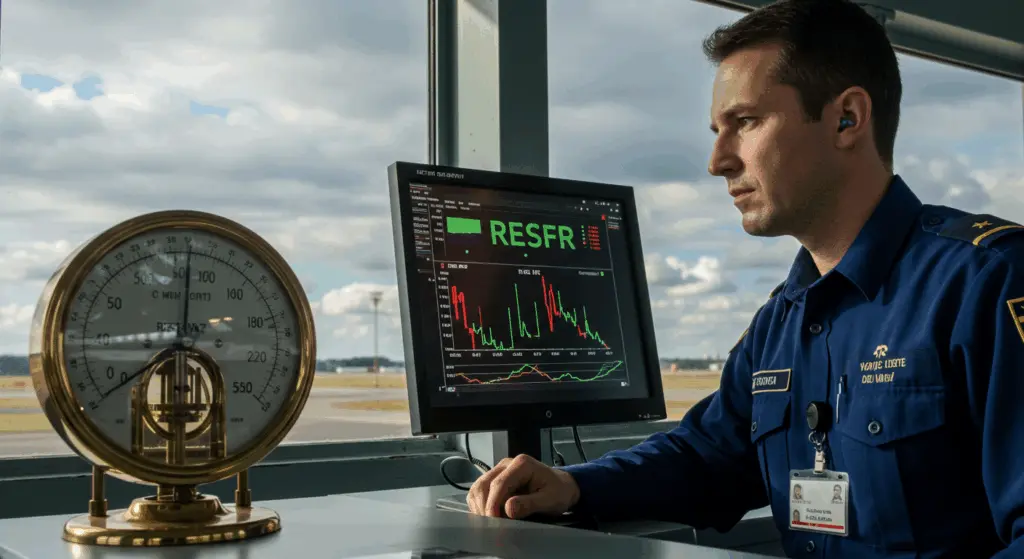
Understanding PRESFR in METAR Reports – A Comprehensive Guide
Pilots scanning through METAR reports frequently see the notation “PRES FR” during rapidly changing weather conditions. This abbreviation indicates that barometric pressure is falling rapidly, often preceding the arrival of significant weather systems like fronts or storms. For aviation professionals, this pressure trend serves as an early warning system, giving pilots early warning of potentially deteriorating flight conditions that might not yet be reflected in other elements of the weather report.
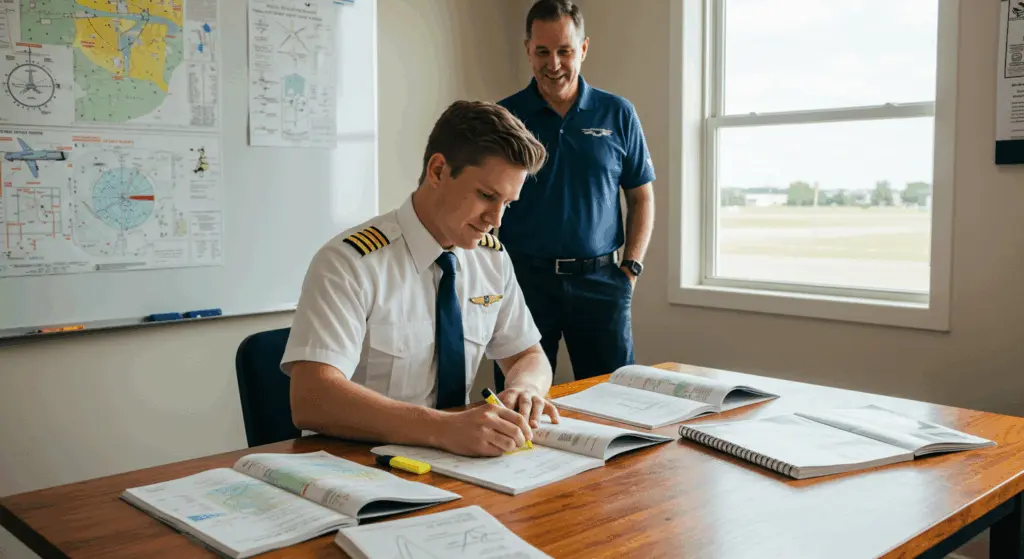
Private Pilot Checkride Questions – What to Expect
Facing an examiner across the table during your private pilot check ride can make even well-prepared students nervous. The oral examination covers everything from airspace classifications and emergency procedures to aircraft systems and weather interpretation—all before you even reach the aircraft. Instead of overthinking potential questions, focus on demonstrating your decision-making abilities and how you apply your knowledge in real situations.

Understanding Airflow Over a Wing – Principles of Aerodynamics
The curved upper surface of an aircraft wing produces the physical phenomenon that makes flight possible. As an aircraft moves forward, air flowing over this curved shape accelerates, creating a pressure difference between the top and bottom surfaces. This pressure differential, combined with the downward deflection of air, generates the upward force that counteracts gravity and lifts massive commercial airliners into the air.
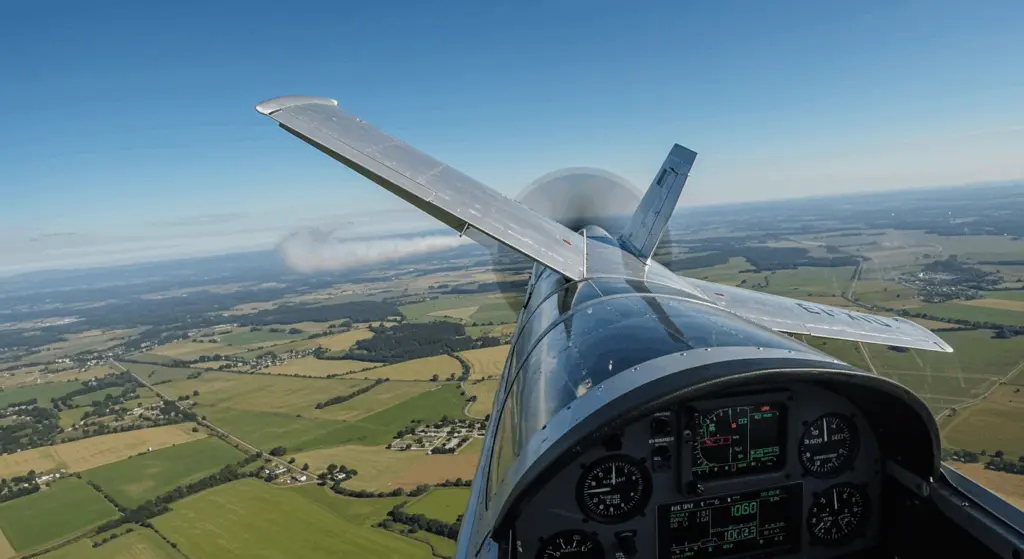
Understanding the Horizontal Component of Lift in Aviation
When an aircraft banks into a turn, the lift force generated by its wings splits into two essential components. The horizontal component of lift provides the centripetal force that turns the aircraft, pulling it toward the center of the turn while the vertical component continues supporting the aircraft’s weight. Pilots must constantly balance these forces, increasing total lift during steeper turns to prevent altitude loss while managing the relationship between bank angle and turn radius.